
Yard Management
Yard management with placement rules and outbound visibility
When the yard has no placement logic, the terminal does not lose square meters. It loses departures, rhythm, and control over what it moves.
Most terminals know where each unit sits. Few know why it is there and whether that slot serves the next outbound move. Essentos Yard Management is the yard module of the Essentos terminal operating system. It structures placement so every slot anticipates the next departure: fewer rehandles, fewer searches, and fewer last-minute decisions when occupancy climbs. Rules per role gate every move, and each milestone produces auditable evidence at the moment of the event.
A yard with free meters but no placement logic loses capacity before it fills up. Congestion starts at the head of the operation, not in the square meters.
Operational change in terminals that structure their yard around outbound moves
The terminal locates units for dispatch or inspection on the first attempt, with no cross-checks and no confirmation calls
Fewer moves that do not produce a dispatch or a service, because the initial placement already answers the next operational milestone
The yard absorbs more volume without saturating critical zones because distribution respects constraints and outbound priorities
Note: representative figures from internal analysis in terminals with comparable operations.
From an improvised yard to a yard governed by rules

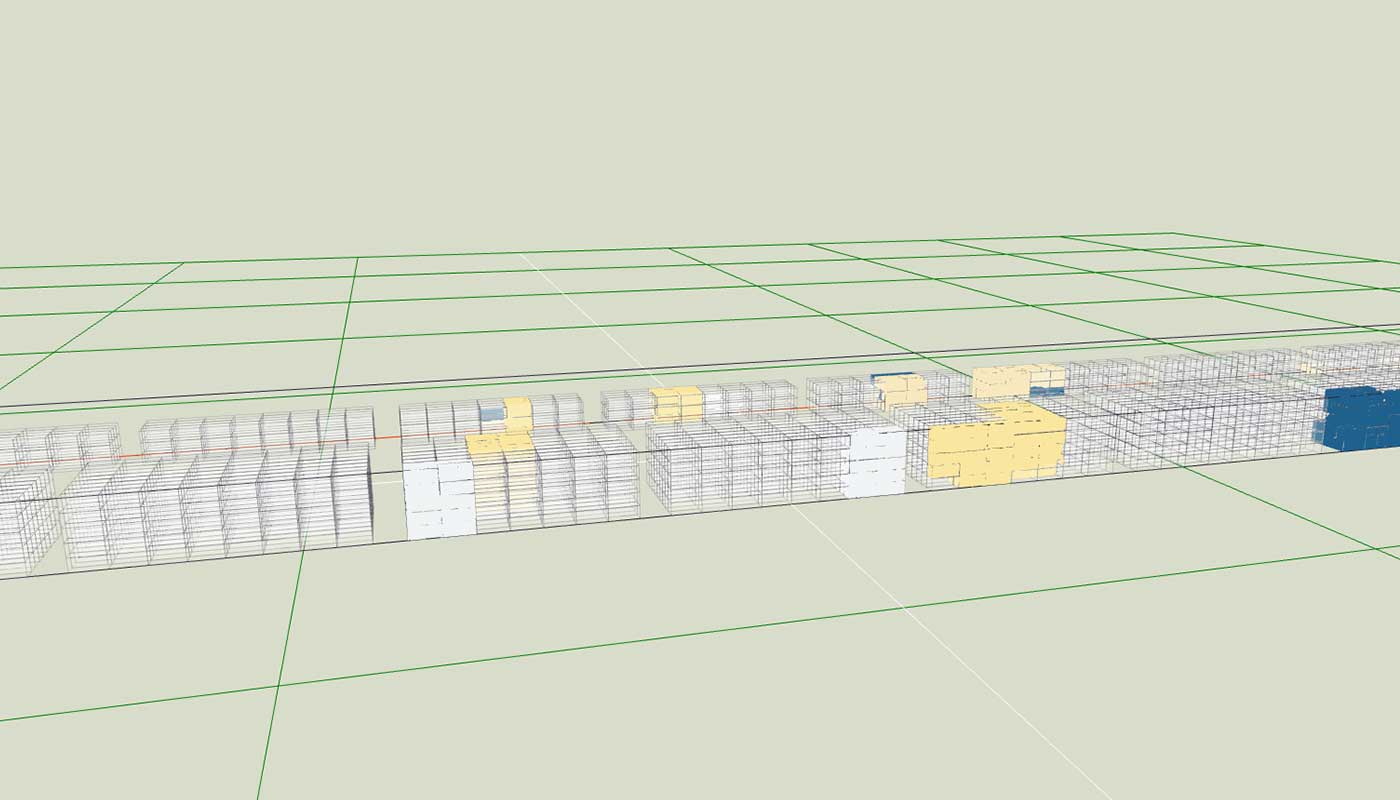
Units searched over the radio, placements with no outbound logic, and rehandles that burn crane time without producing a dispatch.
Structured slot placement by zone, active placement rules, and every move pointed at the next outbound milestone.
Live slot position as the basis of every yard decision
If the terminal does not know exactly where each unit sits and in what operational state, every move decision is a guess. Essentos Yard Management keeps a slot-level inventory that updates on every event: entry, rehandle, inspection, status change.
-
Dispatch finds the unit on the first attempt, without walking the yard or paging the previous shift
-
Rail and road departures are planned on real positions, not estimates passed down from the last briefing
-
Every shift starts on a verified yard inventory, not on a verbal handover
Physical constraints that protect the operation and the capacity
A yard is not run with lists. It is run with the limits that physics imposes: weight per stack, maximum height, cargo compatibility, IMO segregation, and special conditions.
-
Stacking heights and weight limits per zone and per stack
-
Segregation by cargo type and IMO incompatibilities
-
Reefer constraints, power availability, and special positions
-
Zones split by purpose: storage, buffer, fast-lane dispatch, rail pre-staging
Constraints do not slow the yard down. They prevent the corrections that really slow it down.
Pre-positioning and reserved outbound zones
Yard performance is not measured by what fits. It is measured by what leaves without a rehandle. The difference is anticipating the departure from the moment the unit enters.
-
Fast-lane truck dispatch zones with pre-staging coordinated through Gate
-
Rail prep areas tied to the train window so units arrive at the track in sequence
-
Absorption buffers for inbound peaks that never contaminate the outbound zones
-
Guided reorganization by priority when demand shifts during the shift
Every initial placement that already anticipates the departure is a rehandle that does not happen, a crane that does not detour, and a window minute that is not lost.
Visible cost of every move that does not produce a dispatch
The most expensive cost in the yard never shows up on an invoice. It is in the crane hours burned on moves that produce neither a dispatch nor a service.
-
Fewer searches: the slot reflects reality, not the last verbal update
-
Fewer rehandles: the first placement already accounts for constraints and outbound priority
-
More stability under pressure: when occupancy climbs, the rules hold coherence in place
How to reduce dwell time at container terminals before the yard saturates
A yard does not jam in one move. It degrades zone by zone. Essentos Yard Management gives visibility into occupancy and pressure distribution so the team can act while the fix is still a small adjustment, not an emergency reorganization.
Container, bulk, and general cargo yards
Yard Management runs in container terminals, container depots, inland and intermodal terminals, and in multi-purpose facilities across Spain, Europe, and the United States:
The operational logic adapts: slot-level inventory, active constraints, and outbound-driven placement, regardless of the cargo type.
Plugged into the terminal execution chain
The yard does not run alone. Yard Management connects with Gate, Operations, and Billings so every placement, every move, and every dispatch is a confirmed event in the terminal operating system, with evidence per event and rules per role.
Frequently asked questions
What is yard management software for container depots and intermodal terminals? ▾
Yard management software controls the location, status, and movement of every unit inside the terminal yard. Essentos Yard Management adds placement rules, stacking constraints, outbound pre-positioning, and zone-level occupancy visibility, all wired into the wider Essentos terminal operating system.
How does Essentos reduce rehandles in the yard? ▾
By applying outbound logic from the initial placement. When a unit is placed with its next departure in mind, the number of unnecessary moves drops sharply when dispatch time arrives.
Does it work with containers, bulk, and general cargo? ▾
Yes. Essentos Yard Management adapts to different cargo types. Slot logic, constraints, and occupancy visibility work the same way for containers, bulk, general cargo, and mixed operations in multi-purpose terminals.