essentos

Autor: admin

  • Why the gateway is the biggest operational blind spot in your terminal?

    Why the gateway is the biggest operational blind spot in your terminal?

    In most intermodal logistics terminals, the daily flow of trucks is constant. Trucks arrive carrying containers, cargo or key documentation needed for the facility to run smoothly. Yet one area often goes unnoticed—and it generates more errors, bottlenecks and inefficiencies than any other: the gate.

    Yes, the gate. That entrance barrier, seemingly simple, is actually the first major operational filter in your entire logistics chain. When it fails—due to manual processes, validation errors or lack of integration—you don’t just lose time: you lose data, traceability, control and, worst of all, money. Lots of money.

    Did you know that an average 15-minute delay per truck can cost your terminal over $16,000 per month? Or that documentation and container‐assignment errors at the gate account for more than 60% of the conflicts that later end in claims, rework or inventory mismatches?

    This article is a complete guide: an in-depth analysis and, above all, a realistic proposal for operational improvement. If you work in a terminal, manage intermodal flows or simply want to understand why everything starts at the gate, keep reading.

    What is really happening at terminal entry points?

    Let’s get real. Every day, dozens or hundreds of trucks enter rail terminals or dry ports with little effective coordination at the gate. Although some use appointment systems or prevalidation, most still operate with manual, semi-automatic or—worse—disconnected systems.

    • Staff don’t know which container each truck is expected to deliver.
    • They can’t easily verify whether documentation is valid.
    • There are no alerts for previous incidents.
    • And in many cases, there’s not even a proper system to record arrivals.

    Meanwhile, drivers wait. Some have to get out to hand over paperwork. Others receive handwritten instructions. Some go through double validation, or pass and then have to exit again due to undetected errors. The result? Duplicate processes, cascading delays and a feeling of chaos passed directly to the end customer.

    From the operations manager’s point of view

    • There is no full control over which truck enters, with what paperwork, at what time or for what purpose.
    • Incidents are not logged in a way that supports traceability.
    • You cannot answer basic audit or claim questions with certainty.
    • Decisions are made with incomplete information.

    And at the same time, the TOS—your terminal’s heart—often isn’t connected to the gate, or only partially, without real-time validations. This means a gate failure can end up impacting weighing, yard placement or even train loading.

    The invisible consequences: operational chaos and accumulated errors

    The worst part isn’t just an occasional delay or inconvenience. It’s the domino effect. Every error or delay at the gate ripples through the entire logistics chain:

    • Uncoordinated yard: A truck that shouldn’t have entered is already in the yard and its container ends up in the wrong spot. One operator improvises a new location, and another must correct it. Result: accumulated disorder.
    • Incomplete train loads: A container is missing or the wrong one is loaded due to a bad gate validation. Customer penalty and reputation at risk.
    • Documentation errors: Wrong license plate, trucks authorized without valid papers, unrecorded times. All of this prevents robust reporting and complicates inspections.
    • Operational stress: When the gate backs up, everyone goes into “emergency” mode. Supervisors rush in, operators stop other tasks to clear queues, generating even more chaos.

    And the worst part? Nobody measures it. Without clear data or KPIs, you’re left with intuition, complaints and frustration. If it’s not measured, it can’t be improved.

    How much does an inefficient gate cost?

    Let’s use a mid-size terminal example:

    • 90 trucks per day
    • 12 extra minutes per truck due to manual validation
    • Total daily unproductive time: 90 × 12 = 1,080 minutes (18 hours)
    • Opportunity cost: 18 hours × $35/hour = $630 per day
    • Estimated monthly loss (22 days): $630 × 22 = $13,860

    That’s before accounting for contractual penalties, strained driver relationships, additional staffing costs or reputation damage. In one year, a mid-size terminal can lose over $166,000 just by keeping an inefficient gate.

    Gate as a competitive advantage

    For years, terminals have digitized their yards, trains and container tracking—but overlooked the gate. Yet the gate can become your most profitable control point because:

    • The driver, container and documentation converge at one spot.
    • You capture critical data: who enters, when, with what cargo and documentation validity.
    • You prevent downstream errors, reduce wait times and improve traceability.
    • You intervene before mistakes spread—rather than after.

    How the Fastport (Gate) module works

    1. Direct connection to existing TOS/ERP: no replacements or complex integrations.
    2. Automatically retrieves and validates appointments.
    3. Applies OCR/LPR for automatic license plate and document reading.
    4. Triggers real-time alerts on detection of anomalies.
    5. Logs all entries and exits with complete traceability.
    6. Supports integrated weighing and automatic pass generation.
    7. Notifies drivers via app, SMS or email.

    Real cases: how terminals have transformed

    Case 1 – Rail terminal in Spain

    Initial situation: manual entries, 16 minutes per truck on average, paper validation, no TOS link.

    Implementation: Fastport module live in 6 days, direct integration with appointment and weighing systems.

    • Average time per truck: 4 minutes
    • Documentation errors reduced by 93%
    • Daily throughput increased by 26%
    • Peak‐hour queues cut by 85%

    Case 2 – Dry port in southern Europe

    Initial situation: long access queues, overwhelmed staff, manual logging errors.

    Result with Essentos:

    • OCR and real-time alerts at the gate
    • Manual records eliminated
    • Complete document traceability
    • Driver satisfaction up by 2.5 NPS points

    Manual vs digital gate comparison

    Key metricManual gateDigital gate
    Average time per truck15–25 minutes3–7 minutes
    Plate captureManualAutomated OCR (99.8% accuracy)
    Appointment validationVisual/manualPrecheck automated
    Staff required2–3 operators1 operator
    Supervisory visibilityLowReal-time dashboard
    Incident alertsNoYes, in real time
    Driver satisfactionLowHigh
    Access logsPartialComplete and exportable
    Hidden costsHighLow
    Regulatory complianceVariableAuditable

    The most common misconception: assuming the gate can’t change

    Many believe digitizing the gate requires replacing the TOS, ERP or entire tech stack. It doesn’t. Essentos plugs into your existing setup without downtime, new servers or extra hardware—and can be live in under one week.

    What happens if you do nothing

    Doing nothing costs you daily: 6–12 lost operational hours, staff stuck in unproductive tasks, frustrated drivers, mounting errors, partial traceability and blind decisions. A silent drain on critical resources.

    Digitizing the gate is the first real step to an efficient terminal

    • It’s cost-effective: quick implementation and modular pricing.
    • It’s fast: up and running in one week.
    • It doesn’t require system overhauls.
    • It delivers high ROI: fewer errors, smoother flow, happier drivers.
    • And it makes a visible impact from the first truck at the gate.

    Your terminal looks modern the moment a driver crosses the gate without stepping out, paperwork or delays.

    In conclusion

    Digitizing the gate isn’t a trend, it’s an operational necessity. Prevent errors before they start, gain visibility from second one, save tens of thousands annually and make data-driven decisions.

    Want to know how much you’re losing each month by keeping your gate manual?

  • Weighing integrated into your systems: eliminate risks and accelerate your terminal

    Weighing integrated into your systems: eliminate risks and accelerate your terminal

    The container-weighing process is critical for safety, billing accuracy, and operational efficiency in any logistics terminal. Yet when weighing is handled manually and in isolation, it becomes a bottleneck that creates delays, recording errors, and hidden costs that can exceed hundreds of thousands of dollars per year.

    With the integrated weighing feature in Essentos Operations, we turn this critical step into an automated, fully traceable flow—connecting scales, your TOS, and operators in real time without interrupting daily operations.

    In this article we will explore in depth:

    • How manual weighing processes currently operate and why they fail
    • The economic and operational impact of every lost minute and every recording error
    • Technical and organizational causes that perpetuate inefficient weighing
    • The architecture and components of Essentos Operations’ integrated weighing
    • Real-world implementation cases with quantitative data
    • Additional benefits: traceability, compliance, and strategic insight
    • Best practices to maximize ROI and prepare your terminal for the future

    If you want to optimize your terminal, reduce costs, and improve the experience of customers and drivers, every area—including weighing—must be optimized.

    The current state of weighing: manual and disconnected

    Despite having electronic scales and centralized management systems, many terminals still rely on manual weighing. The typical workflow is:

    1. Paper or isolated system recording: the operator writes weights on printed forms or local spreadsheets.
    2. Manual entry into the TOS: a staff member transfers the data to the control system, risking transcription errors and duplicates.
    3. Queue waiting: when the scale is in use, trucks line up, increasing dwell times and wasting minutes.
    4. Shift handover backlog: at the end of the day, a backlog of pending entries delays information availability for planning.

    This fragmented, human-dependent approach turns weighing from a support function into a bottleneck affecting the gate, the yard, and train or truck dispatch.

    Lack of scale-to-TOS integration prevents real-time data access, limiting incident response and hindering traceability needed for audits or claims.

    Economic impact: every minute matters

    To illustrate manual-weighing costs, consider a medium-sized terminal weighing 200 containers per day:

    ConceptDataCalculationResult
    Containers/day200200 × 5 min each1,000 min = 16.7 h
    Operational cost/hour$40/h16.7 × 40$668/day
    Working days/month22668 × 22$14,696/mo
    Total annual cost14,696 × 12$176,352/yr

    These direct costs rise further due to:

    • Data entry errors (3% of records) → 200 × 3% × $6/error = $36/day
    • Fines for undetected overweight (1 incident/week × $300) = $1,200/mo
    • Administrative reconciliation time (1 h/day × $30/h = $30/day)

    Approximately $200,000/yr in hidden losses—excluding reputational impact and driver dissatisfaction.

    Root causes: technical and cultural barriers

    Manual weighing persists due to a mix of factors:

    Isolated equipment

    Scales are often standalone devices with no API or network link, forcing offline processes.

    Lack of mobile hardware

    Operators lack tablets or RFID readers in the field, causing delays and workflow breaks.

    Parallel processes

    Weighing isn’t coordinated with the gate or yard, leading to redundant waits and unsynchronized data.

    Resistance to change

    Comfort with traditional processes and lack of tech training slow adoption of automation.

    How to integrate weighing into your systems, as Essentos Operations does

    1. Plug-and-play scale connection: secure APIs send weight data instantly to your TOS, no manual steps.
    2. Mobile terminals for operators: tablets and RFID readers with intuitive interface to display appointments and capture plate and weight.
    3. Automatic validation: configurable rules alert on tolerance deviations, off-appointment loads or data inconsistencies.
    4. Full audit log: each weighing is documented with timestamp, device, operator and optional container photo.

    Implementation includes:

    • Direct integration with your TOS/ERP in 5 days.
    • Operator training in 8 hours.
    • Real-time dashboards and control panel.

    Success story: 95% reduction in weighing time

    A Mediterranean port terminal deployed Essentos Operations for weighing in 5 days:

    Before implementation

    • Average weighing time: 12 minutes
    • Data entry errors: 4% of records
    • Queues of up to 10 trucks
    • Monthly incident costs: +$9,000

    After 2 months

    MetricBeforeAfter
    Weighing time12 min2 min
    Data entry errors4%0.2%
    Truck queues100
    Incident cost reduction$9,000/mo$1,000/mo

    “The change has been revolutionary: we operate without queues and trust every data point.” – Operations Director

    Strategic and operational benefits

    • No more disputes with drivers over incorrect weights
    • Real-time visibility for yard and train planning
    • Automated reporting for audits and compliance
    • Error-free data export to accounting systems
    • Improved NPS among drivers and end clients

    Future outlook: beyond weighing

    Once integrated weighing is established, the roadmap includes:

    1. Advanced analytics for predictive scale maintenance
    2. IoT integration for real-time cargo condition monitoring
    3. Automated labeling based on weight and dimensions
    4. Blockchain for immutable traceability in critical shipments

    Turn weighing into your competitive advantage

    The integrated weighing feature in Essentos Operations is more than a technical upgrade—it’s a cultural and strategic shift. Instantly cut costs, ensure data reliability, and speed up your process, positioning your terminal as a digital and efficiency leader.

    By automating every weighing step, you eliminate disputes, optimize planning, and gain the full traceability the market demands.

    Take the definitive step and transform weighing from a routine task into a competitive lever.

  • Digital vs Non-Digital terminals: What efficiency really looks like in intermodal logistics

    Digital vs Non-Digital terminals: What efficiency really looks like in intermodal logistics

    For years, many logistics terminals have continued to operate with outdated or partially manual systems. Paper-based processes, siloed spreadsheets, and verbal coordination remain commonplace across intermodal hubs, especially those not fully integrated with a modern Terminal Operating System (TOS). But what exactly is the cost of staying non-digital?

    In this article, we compare traditional (non-digital) terminals with digitalized ones to understand the tangible impact of digital transformation in intermodal logistics—and why TOS software is not just a convenience but a necessity.

    1. Visibility: From guessing to knowing

    Non-Digital terminals:

    • Lack real-time container tracking.
    • Relies on paper forms, radio calls, or walkie-talkies.
    • Operators often cannot locate a container or truck without physically checking.

    Digital terminals:

    • Offer real-time visibility of all container movements via TOS software.
    • Use sensors, cameras, and integrated data to track everything from gate entries to crane lifts.
    • Dispatchers and operators have a live dashboard accessible from any device.

    Impact: Digital terminals reduce search times for containers by over 80%, translating into faster turnarounds and fewer delays.

    2. Planning and yard optimization

    Non-Digital terminals:

    • Planning relies on manual sketches or whiteboards.
    • Yard congestion is frequent due to uncoordinated truck entries and stacking errors.
    • Resource allocation (cranes, labor) is based on guesswork.

    Digital terminals:

    • Operate with automated planning tools integrated into a logistics platform.
    • Use algorithms to optimize yard layout, container stacking, and gate appointments.
    • Predictive analytics allow for smarter labor and equipment usage.

    Impact: Through better yard planning and load distribution, digital terminals improve throughput by 20–35%.

    3. Data consistency and reporting

    Non-Digital terminals:

    • Data is handwritten or copied between systems.
    • High error rates, inconsistent formats, missing fields.
    • Reports take hours—or days—to compile.

    Digital terminals:

    • All events are logged automatically in the TOS.
    • Unified data models ensure consistency across operations.
    • Reports are generated instantly, with export options for clients, authorities, and partners.

    Impact: Reliable data strengthens client trust, supports audits, and enables evidence-based operational decisions.

    4. Operational costs

    Non-Digital terminals:

    • Labor-intensive processes increase staffing needs.
    • Unplanned downtime due to poor coordination.
    • High fuel costs due to inefficient equipment usage.

    Digital terminals:

    • Streamlined operations reduce labor and idle time.
    • Automations prevent delays and unproductive movements.
    • Monitoring tools cut maintenance and fuel consumption.

    Impact: Digital terminals report cost reductions of up to 25% in day-to-day operations.

    5. Client service and reliability

    Non-Digital terminals:

    • Communication with clients is slow and fragmented.
    • Difficult to estimate ETAs or confirm completed tasks.

    Digital terminals:

    • Share live updates via the TOS platform.
    • Automated notifications for arrivals, pickups, and status changes.
    • Self-service portals improve transparency for end clients.

    Impact: Digital terminals provide higher client satisfaction and retain more contracts long term.

    Why TOS software is no longer optional

    Digital transformation isn’t just about visibility—it’s about survivability. Intermodal logistics is evolving, and terminals that fail to modernize will eventually fall behind.

    A modern terminal operating system (TOS) like Essentos provides:

    • Real-time container tracking
    • Yard automation and optimization
    • Interoperability between transport modes
    • Operational analytics
    • Integrated gate and resource management

    These aren’t features—they’re requirements for any terminal looking to scale in a connected supply chain.

    Final thoughts

    Digital terminals are faster, more reliable, and more competitive. They make better use of assets, reduce overhead, and empower every stakeholder—from yard operators to end clients.

    The shift to digital isn’t about replacing people. It’s about giving them the right tools to do more with less.

    In intermodal logistics, efficiency is not a buzzword. It’s your bottom line.

  • Global container visibility is no longer a luxury-it’s the backbone of modern logistics

    Global container visibility is no longer a luxury-it’s the backbone of modern logistics

    For years, it has been considered normal for containers to get lost, delayed, or simply vanish. Trucks line up at terminals without knowing if their cargo has arrived. Coordinators make endless calls to locate assets in transit. Clients only get answers when it’s too late.

    At Essentos, we’ve seen how this lack of real-time visibility slows down supply chains and increases costs. Real-time container tracking shouldn’t be limited to isolated terminals—it should follow the asset across the entire route, from origin to destination.

    With modern industrial IoT solutions autonomous, low maintenance, and globally connected—full visibility is no longer aspirational. It’s accessible, and it’s a competitive edge.

    Real-time visibility: What it actually means

    This isn’t about spreadsheets or arrival emails. It means:

    • Knowing the exact location of every container, globally.
    • Seeing status updates across nodes and modes of transport.
    • Reacting to exceptions like idle containers or route deviations as they happen.

    This is especially powerful for companies with their own fleets, those using multimodal routes, or logistics operators needing transparency throughout the chain.

    Automated tracking for containers and cranes

    Essentos integrates autonomous IoT sensors that attach to containers, cranes, and other mobile equipment. These units don’t require cabling or ongoing maintenance, and provide live data over years of use.

    Our terminal operating system (TOS) translates this data into operational insights, delivering full situational awareness—from gate entry to final delivery—without relying on third-party reports or manual processes.

    Use case: Tracking a container across borders

    Imagine a container shipped from Southeast Asia to a distribution center in Spain. Along the way, it moves through ocean freight, rail terminals, and road transport. Traditional systems would require different updates at each step—often delayed or incomplete.

    With an integrated TOS and autonomous tracking:

    • Every movement is logged and timestamped in real time.
    • Stakeholders are alerted if the container is stationary for too long or deviates from the route.
    • All locations and events are visible in one unified dashboard.

    Use case: Crane and yard equipment visibility

    Grasping where key machines are—and what they’re doing—enables smarter resource allocation. Whether it’s reducing idle time, preventing interference, or optimizing shift usage, knowing the real-time status of your equipment changes how a terminal functions day to day.

    The cost of doing it right

    Digitizing 500 containers with long-life industrial sensors might range from $70 to $180 per unit, depending on autonomy, network, and coverage. That’s an investment of $35,000 to $90,000.

    Compare that to the cost of:

    • One lost container.
    • One missed delivery due to poor coordination.
    • One week of operational downtime from equipment mismanagement.

    ROI is typically under six months. After that, each asset you can trace is one less uncertainty in your network.

    Final thoughts

    Real-time visibility enables more than tracking—it enables decisions. And in the logistics business, better decisions are what move cargo, avoid costs, and satisfy clients.

    If your terminal doesn’t yet operate with an integrated TOS platform and autonomous tracking, now is the time to evaluate the gap. The advantage is not just in technology—it’s in timing.

    if you can’t see your container, you can’t secure your operation.

  • How U.S. and Canadian Terminals can boost Intermodal freight efficiency with advanced TOS solutions like Essentos

    How U.S. and Canadian Terminals can boost Intermodal freight efficiency with advanced TOS solutions like Essentos

    The growing need for modern terminal operating systems in North America

    The logistics and intermodal freight sector in the U.S. and Canada has witnessed substantial growth over the past decade. With the increasing demand for faster, more efficient transportation solutions, terminal operators are under pressure to adopt technology that can keep pace with these demands. As freight volumes continue to rise, traditional methods of operation are no longer sufficient. This has created a critical need for more advanced and efficient systems to manage terminal operations effectively.

    Intermodal terminals are a crucial component of the logistics supply chain. They serve as the connecting hubs for various transportation modes, including trucks, trains, and ships. Efficient terminal operations are key to minimizing delays and ensuring goods move smoothly between different transport modes. In order to stay competitive in the fast-evolving logistics landscape, North American terminal operators must adopt innovative solutions, such as modern Terminal Operating Systems (TOS) like Essentos.

    Essentos is a powerful and flexible TOS that is designed to address the challenges that intermodal terminals face today. From automating processes to improving operational visibility, Essentos helps terminals become more efficient, responsive, and capable of meeting the growing demands of the logistics sector.

    The challenges facing U.S. and Canadian intermodal terminals

    While the growth of the logistics industry presents many opportunities, it also introduces several challenges for intermodal terminals. These challenges can significantly hinder operational efficiency, increase costs, and affect overall customer satisfaction. Some of the key challenges faced by U.S. and Canadian intermodal terminals include:

    • Operational inefficienciesMany terminals continue to rely on outdated systems or manual processes, which can create bottlenecks in operations. Manual tracking, scheduling, and resource management are often slow and prone to human error. These inefficiencies can cause delays in cargo handling, which ultimately leads to longer transit times, higher costs, and less satisfied customers.
    • Lack of real-time visibilityOne of the most significant challenges facing terminals today is the lack of real-time visibility into their operations. Without real-time tracking of inventory, equipment, and shipments, terminal operators struggle to make informed decisions about resource allocation and process optimization. This lack of visibility can result in inefficient workflows, underutilized resources, and delayed shipments.
    • Rising regulatory demandsThe logistics industry, including intermodal terminals, is facing increasing pressure to comply with new regulations. These include stricter safety standards, environmental regulations, and security protocols. Meeting these regulations can be costly and time-consuming, especially for terminals that are still using outdated systems. The inability to track and report compliance efficiently can result in fines, legal issues, and a damaged reputation.

      In light of these challenges, it’s clear that traditional terminal management systems are no longer adequate. U.S. and Canadian terminals need a modern, integrated solution that can automate operations, improve visibility, and ensure compliance with evolving regulations.

    Essentos: A game-changer for North American terminals

    Essentos is a next-generation Terminal Operating System that provides comprehensive solutions to the challenges faced by intermodal terminals. By integrating automation, real-time visibility, and regulatory compliance features, Essentos helps terminal operators increase efficiency, reduce costs, and improve overall performance. Here are the ways in which Essentos stands out:

    1. Automation of key processes
    One of the most significant advantages of Essentos is its ability to automate a wide range of terminal operations. From gate management and crane operations to inventory control and truck scheduling, Essentos automates time-consuming manual processes, allowing terminal operators to focus on more strategic tasks.

    Automation leads to faster processing times, reduced human error, and lower labor costs. This is particularly important in a fast-paced environment where even a small delay can result in significant disruptions in the supply chain. By automating routine tasks, Essentos helps terminals achieve smoother operations and faster turnaround times.

    2 Real-Time visibility for better decision making
    Essentos provides terminal operators with real-time tracking and visibility into every aspect of their operations. Through a user-friendly dashboard, managers can monitor cargo movement, track resource utilization, and gain insights into terminal performance.

    With real-time data at their fingertips, terminal operators can make informed decisions on the fly. Whether it’s adjusting schedules to accommodate delays, reallocating resources to prevent bottlenecks, or optimizing equipment usage, real-time visibility ensures that terminals operate efficiently and minimize downtime.

    3. Compliance with regulations
    The logistics industry is becoming increasingly regulated, with new safety, environmental, and security standards being implemented regularly. Essentos is designed to help terminals stay compliant with these regulations by automating compliance reporting and ensuring that all activities are tracked and documented.

    Essentos provides features that automatically capture and record data related to safety checks, environmental monitoring, and security protocols. This makes it easier for terminals to comply with regulations, avoid penalties, and reduce the risk of legal complications. .

    4. Scalable and flexible
    As the intermodal freight sector continues to grow, so do the demands on terminals. Essentos is designed to scale with your terminal, whether you’re operating a small facility or managing a large hub. Its flexible architecture allows it to be customized to meet the specific needs of different terminals, ensuring that operators get the most out of the system.

    This scalability means that as your terminal grows, Essentos will grow with it, allowing you to expand operations without the need for significant infrastructure changes or system overhauls.

    5. Enhanced data analytics for improved performance
    Essentos doesn’t just track operations—it also provides advanced data analytics tools to help terminal operators make data-driven decisions. By analyzing historical and real-time data, Essentos helps identify inefficiencies, track performance, and predict potential disruptions before they occur.

    With powerful reporting features, Essentos allows terminal operators to track key performance indicators (KPIs) such as turnaround times, resource utilization, and cargo throughput. This data can be used to optimize operations, improve customer service, and increase profitability. .

    How Essentos can transform U.S. and Canadian terminals

    Implementing Essentos in a terminal can yield transformative results, improving efficiency, reducing costs, and enhancing customer satisfaction. Here’s how:

    Faster operations: Automation of key processes leads to faster processing times, which in turn reduces turnaround times and increases throughput.

    Reduced costs: By optimizing resource usage, automating tasks, and improving operational efficiency, Essentos helps terminals cut costs and improve their bottom line.

    Improved customer experience: With real-time tracking and reduced delays, Essentos ensures that customers receive timely and reliable services, improving customer loyalty and satisfaction.

    Greater operational flexibility: Essentos’ scalability and customization options allow terminals to adapt quickly to changing market demands, helping them stay competitive in a rapidly evolving industry.

    Regulatory compliance made easy: With automated compliance features, Essentos helps terminals meet regulatory requirements without added complexity or administrative burden.

    Why Essentos is the right solution for North American terminals

    Essentos has been successfully implemented in terminals worldwide, providing real-time operational benefits that enhance performance and efficiency. Its advanced features, ease of implementation, and scalability make it the ideal solution for intermodal terminals looking to modernize and stay competitive in the ever-evolving logistics landscape.

    By adopting Essentos, U.S. and Canadian terminals can achieve operational excellence, reduce costs, and ensure long-term success in the dynamic world of intermodal freight. Essentos offers a proven, reliable, and flexible solution that helps terminals optimize their operations, improve customer satisfaction, and stay ahead of the competition.

    Why Essentos is the right solution for North American terminals

    Essentos has been successfully implemented in terminals worldwide, providing real-time operational benefits that enhance performance and efficiency. Its advanced features, ease of implementation, and scalability make it the ideal solution for intermodal terminals looking to modernize and stay competitive in the ever-evolving logistics landscape.

    By adopting Essentos, U.S. and Canadian terminals can achieve operational excellence, reduce costs, and ensure long-term success in the dynamic world of intermodal freight. Essentos offers a proven, reliable, and flexible solution that helps terminals optimize their operations, improve customer satisfaction, and stay ahead of the competition.

    A future-ready solution for U.S. and Canadian terminals

    In conclusion, as the intermodal freight industry continues to grow and evolve, U.S. and Canadian terminals must embrace innovation to remain competitive. Essentos offers a comprehensive TOS solution that addresses the most pressing challenges in the industry—automation, real-time visibility, compliance, and cost reduction. By adopting Essentos, terminals can transform their operations, boost efficiency, and provide better service to their customers.

    Ready to optimize your terminal operations and stay ahead of the competition? Contact Essentos today and schedule a demo to see how our powerful TOS solution can help you achieve your goals.

  • How rail terminals in North America can cut costs and emissions with smart automation and why Essentos is leading the way

    How rail terminals in North America can cut costs and emissions with smart automation and why Essentos is leading the way

    A new era of efficiency and sustainability in rail logistics

    Rail freight is gaining momentum across the United States and Canada as a cleaner, more efficient alternative to long-haul trucking. While the rail network itself is inherently sustainable, many intermodal terminals that support it still rely on outdated, manual systems that limit their true potential.

    Today’s operational challenges — labor shortages, volatile fuel prices, environmental compliance, and supply chain complexity — are pushing terminal operators to look for smarter solutions. And smart doesn’t mean more expensive. On the contrary, automation and digital tools can drastically cut operational costs, reduce emissions, and enhance service quality without massive capital expenditure.

    This article explores how smart terminal operating systems (TOS) like Essentos are driving this transformation across North America. We’ll explain the real cost of inefficiency, the tangible benefits of automation, and why Essentos is the right partner for terminals ready to modernize.

    The high cost of manual inefficiencies

    Legacy processes come with hidden costs. In rail terminals, inefficiencies are often baked into daily operations — from clipboards and phone calls to siloed spreadsheets and delayed communications.

    The result? Delayed trains. Missed service windows. Overworked staff. Underused equipment.

    According to industry studies:

    • A mid-size rail terminal loses up to 15% of its operational capacity due to poor process coordination.
    • Labor-intensive workflows lead to avoidable human error and longer cycle times.
    • Equipment idle time leads to unnecessary fuel consumption and higher maintenance costs.

    These issues create a domino effect that impacts customers, increases emissions, and erodes profitability.

    Why automation is a game-changer for terminals

    Smart automation isn’t about replacing workers. It’s about enabling them to operate faster, smarter, and with fewer errors. A modern TOS can handle thousands of data points per hour — something no human team can match in speed or accuracy.

    Here are some automation benefits for North American rail terminals:

    Automated yard planning: Allocate space based on live train schedules and UTI data.

    Optimized crane movements: Minimize empty moves and reduce crane idle time.

    Digital truck coordination: Route trucks efficiently within the terminal to reduce congestion.

    Real-time status tracking: Provide operators, customers, and authorities with live updates.

    These capabilities help terminals process more volume with the same footprint — and with fewer emissions, thanks to reduced equipment runtime and better energy efficiency.

    Essentos: designed for real-world rail terminals

    Essentos is a new generation of TOS, built specifically for intermodal and rail-focused terminals. Unlike rigid legacy systems, Essentos is modular, cloud-ready, and designed to be implemented without disruption.

    Key features include:

    AI-powered automation: Predictive crane and yard operations based on live traffic, container types, and slot availability.

    Seamless UTI and truck recognition:Use computer vision to automate identification and registration.

    Smart billing and service tracking: Automate financial workflows and eliminate errors in invoicing.

    Compliance-ready architecture: Fully compatible with regulatory requirements in the U.S. and Canada, including digital documentation and emissions reporting.

    Essentos doesn’t just digitize your terminal — it transforms it into a smarter, greener, and more profitable operation.

    Aligning with sustainability goals

    In both the U.S. and Canada, logistics operators face increasing pressure to meet environmental standards. Government targets for carbon reduction are being backed by new regulations and incentives for green infrastructure.

    Essentos supports sustainability by:
    Reducing equipment idle time cutting diesel usage.

    Providing detailed emissions tracking for ESG reporting.

    Improving throughput without additional land or capital equipment.

    Encouraging modal shift by making intermodal freight more competitive with trucking.

    By improving energy and asset efficiency, terminals using Essentos can become a part of a broader shift toward greener freight across North America.

    Faster ROI, lower risk

    One of the biggest misconceptions about automation is cost. Many terminals assume they need a large investment to make a meaningful upgrade. In reality, modular platforms like Essentos allow for gradual implementation — with visible ROI in just months.

    Examples from existing clients:

    30% reduction in operational costs within 12 months.

    60% faster processing times for intermodal units.

    80% fewer billing discrepancies through automated invoicing.

    Essentos provides the tools and support to upgrade operations without disrupting day-to-day activity — so terminals can modernize with confidence.

    The time to act is now

    Delaying digital transformation in terminal operations comes with increasing risks:

    Competitors who automate will offer faster, cheaper service.

    Improve service and speed

    Align with environmental goals

    Unlock new growth without expanding your footprint

    Essentos provides the tools and support to upgrade operations without disrupting day-to-day activity — so terminals can modernize with confidence.

    Let’s move freight smarter, faster, together.

  • Types of shipping containers:A complete guide to optimizing logistics

    Types of shipping containers:A complete guide to optimizing logistics

    What is a cargo container and why is it essential?

    In the world of global transport and logistics, cargo containers play a crucial role by enabling the efficient transportation of goods through various modes of transport, such as ships, trains, and trucks. These standardized containers not only simplify cargo handling but also help reduce operational costs, enhance safety, and streamline supply chain management.

    The use of standardized containers has transformed logistics worldwide, allowing a continuous flow of goods between countries and continents. However, choosing the right container is critical, as each type is designed to meet specific needs depending on the type of goods being transported.

    In this guide, we will explore the types of cargo containers, their most common applications, and how to choose the right container to optimize the logistics processes in your company.

    The importance of choosing the right container for your cargo

    Selecting the correct cargo container is a fundamental pillar in the logistics chain, as each type of merchandise requires specific conditions for safe and efficient transport. Choosing the right container not only affects the integrity of the products but also optimizes resources throughout the logistics process.

    A well-chosen container can minimize loading and unloading times, facilitate handling at different points in the supply chain, and better adapt to the modes of transport used. This is crucial for companies looking to maximize operational efficiency and meet delivery deadlines, avoiding costly delays and ensuring customer satisfaction.

    In addition, using the appropriate containers is a key strategy for improving cargo traceability, as it allows for better inventory control and facilitates incident management. In a globalized logistics environment, where precision and speed are essential, making informed decisions about the type of container can make a significant difference in a company’s competitiveness and profitability.

    Main types of cargo containers

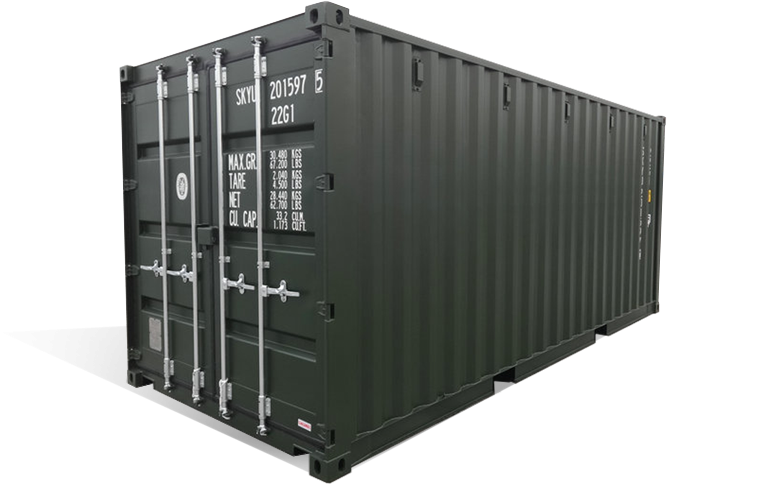
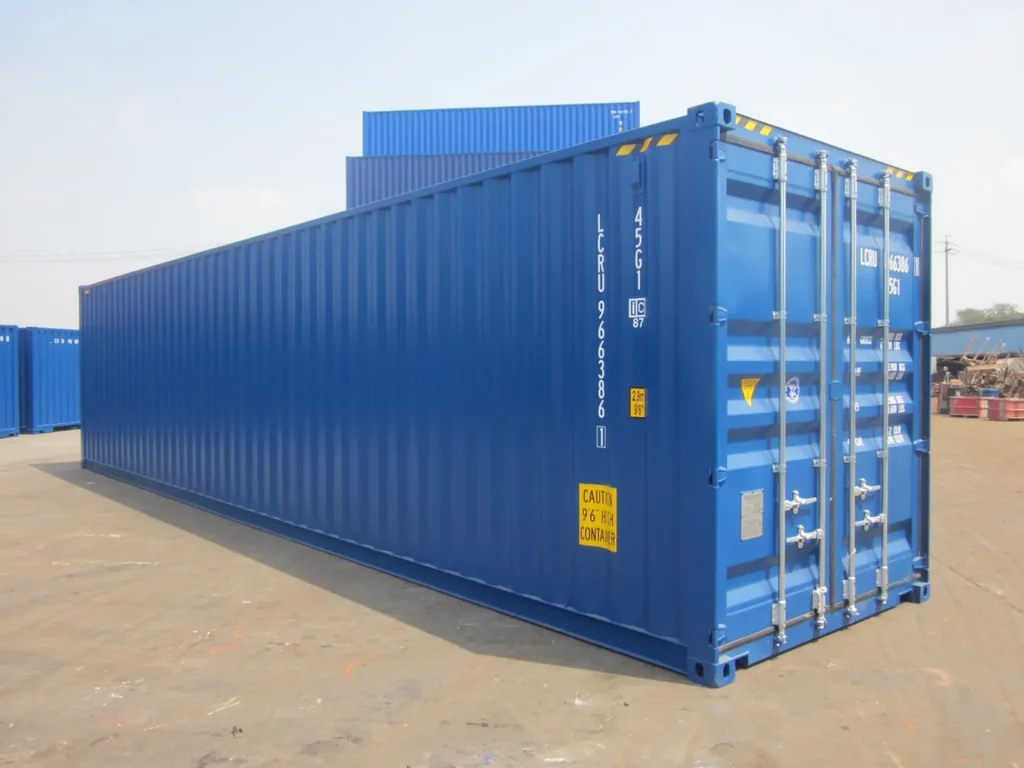
    • Dry container


      Dry containers are used across a wide range of industries due to their versatility. However, if your cargo is temperature-sensitive or requires more specialized space, you may need to consider other container types.

      Features: The dry container is the most common type in the freight transport industry. With a closed and solid structure, it provides excellent protection against weather conditions.

      Uses: This type of container is ideal for dry goods, such as clothing, electronics, manufactured products, and industrial materials.

      Available sizes: 20 and 40 feet. The 40-foot container is the most widely used standard for general cargo shipments.

    • Reefer container


      Reefer containers are essential to ensure that products arrive in optimal condition, especially when transported over long international routes.

      Features: Reefer containers are designed to maintain a constant temperature during transport. They are equipped with a refrigeration system that regulates the internal temperature, allowing for the transportation of temperature-sensitive products such as perishable food, pharmaceuticals, and flowers.

      Uses: Ideal for perishable products such as fruits, vegetables, dairy products, meat, and medications that require temperature control.

      Temperature: Reefer containers can maintain temperatures ranging from -25 °C to +25 °C, making them perfect for products that need to be kept fresh or frozen.
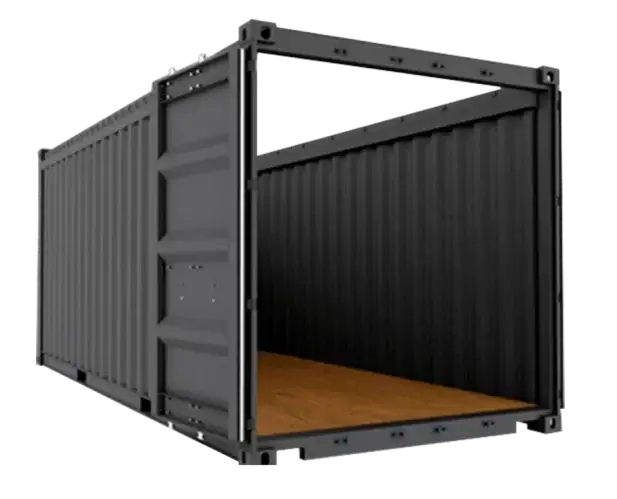
    • Open top container


      Open top containers offer flexibility for transporting products that do not fit within the dimensions of a standard container, which is common in the transport of industrial goods.

      Features: An open top container is a container without a roof, which facilitates the loading and unloading of tall or bulky products. These containers have a tarpaulin cover to protect the cargo from the elements.

      Uses: They are ideal for bulky cargo such as heavy machinery, turbines, and any object that does not fit in a standard container.

      Available sizes: 20 and 40 feet.
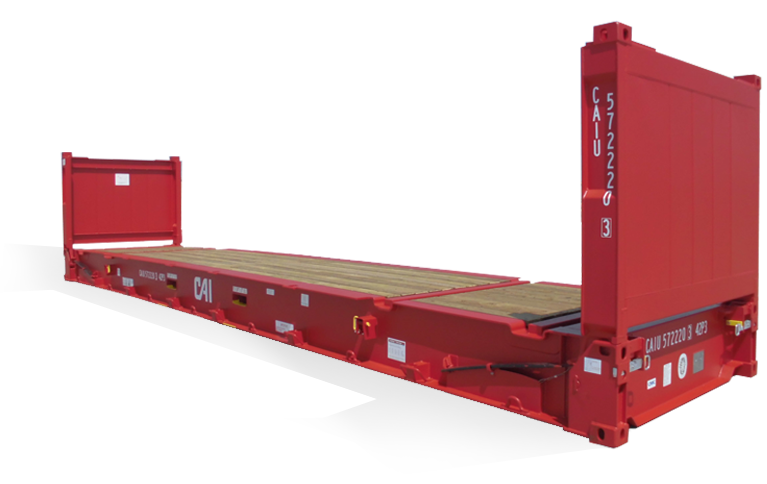
    • Flat rack container


      The flat rack container is perfect for items that require transport without height restrictions, as it has no roof or walls limiting the size of the cargo.Features: Flat rack containers are flat platforms without walls or a roof, designed to carry oversized or heavy products.

      Uses: Ideal for heavy vehicles, small boats, cranes, and industrial machinery.

      Available sizes: 20 and 40 feet.


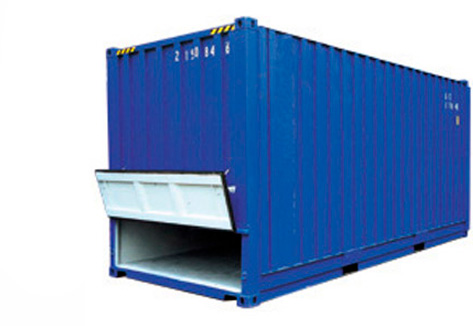
    • Bulk cargo container


      Bulk cargo containers enable the efficient transport of large quantities of unpackaged products, significantly reducing handling costs.Features: Bulk containers are designed to transport unpackaged goods such as granules, liquids, powders, and loose materials.

      Uses: Commonly used in the agricultural industry to transport grains, cereals, sugar, and minerals.

      Capacity: 20 feet.
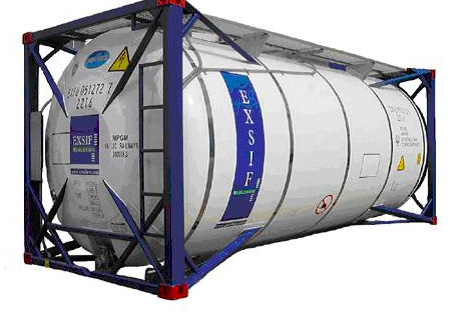
    • Tank container


      Tank containers are a safe and efficient option for transporting liquids that require specific storage and transport conditions.Features: Tank containers are designed for the transport of bulk liquids or gases. These containers are cylindrical and have a reinforced structure to withstand the pressure of transporting products such as chemicals or fuels.

      Uses: Used to transport hazardous chemicals, industrial oils, fuels, and other liquids or gases.

      Available size 20 feet.
    • Platform container


      This type of container is mainly used for cargo that requires a solid platform to be secured during transport.Features: Platform containers are a base without walls or a roof, ideal for heavy and oversized cargo.

      Uses: Perfect for heavy machinery, vehicles, and large materials.

      Available sizes 20 and 40 feet.
    • High cube container


      High cube containers are 40-foot versions of standard containers but with an extra foot in height, allowing for more internal space.Features: They are ideal for lightweight but bulky goods such as furniture, appliances, and clothing.

      Uses: Perfect for heavy machinery, vehicles, and large materials.

      Available sizes 40 and 45 feet.

    How to select the appropriate container for your cargo?

    Selecting the right container for your cargo is an essential step to ensure efficiency and safety in freight transport. To make the best decision, it is important to consider several key factors:

    Type of goods: Identify whether your cargo is general, perishable, liquid, or hazardous. For example, perishable products require refrigerated containers (reefers), while liquids or chemicals may require tank containers.

    Dimensions and weight: Check the dimensions and weight of the cargo to ensure that the selected container can accommodate it without issues. This is crucial to avoid overloading and to maximize available space.

    Transport conditions: Evaluate the conditions your cargo will be exposed to, such as temperature changes, humidity, or sudden movements. Containers with special features like ventilation or thermal insulation may be necessary in some cases.

    Route and regulations: Consider the specific regulations of each route or country your cargo will pass through. Some types of containers comply with specific standards that facilitate customs clearance and reduce legal complications.

    Usage frequency: If your cargo is recurring, it may be more cost-effective to invest in a specific container that fits your long-term logistics needs..

    Taking these aspects into account when selecting a container not only improves the protection of your cargo but also optimizes costs and ensures regulatory compliance at each stage of transport.

    Key advantages of using the right cargo container


    Space optimization: Specialized containers allow for maximum use of available cargo space, reducing transportation and storage costs.

    Cost reduction: By choosing the right type of container for your cargo, you can significantly reduce handling costs and the risk of damage.

    Safety and protection: Each type of container is designed to protect your goods during transport, ensuring they arrive in good condition regardless of external conditions.

    Regulatory compliance: Containers comply with international transport regulations, ensuring compliance with environmental and safety standards.

    Innovations in cargo containers: driving the logistics of the future

    Cargo container innovations are revolutionizing the way goods are transported. Smart containers, equipped with technologies like IoT (Internet of Things) and advanced sensors, allow real-time monitoring of internal conditions such as temperature, humidity, and potential impacts. This continuous tracking capability not only enhances cargo safety, but also optimizes supply chain management by providing valuable data that can be used to predict and prevent issues before they occur.

    Additionally, the trend toward more eco-friendly containers is gaining momentum. Made with recyclable materials and designed to be lighter, these containers help reduce the carbon footprint of transport, aligning with growing environmental regulations and consumer expectations for more sustainable practices.

    Keeping up with these innovations is crucial for companies seeking to maintain a competitive edge in the logistics market. Adapting to new cargo container technologies not only optimizes current processes, but also positions businesses as leaders in efficiency and sustainability within the industry.

    The right container for every need

    Choosing the right cargo container is essential for any company involved in international trade. By understanding the features and benefits of different container types, businesses can significantly improve operational efficiency, reduce costs, and enhance logistics safety.

    Whether you need to transport general goods, perishable products, or heavy materials, there is a suitable container for every need. Use this guide to ensure your company chooses the best available options in the industry.

    Want to optimize your logistics operations? Discover how Essentos can help you efficiently manage your transport and ensure the safety and compliance of your international shipments. Contact us today!

  • Types of freight railcars in railway transport:A complete guide

    Types of freight railcars in railway transport:A complete guide

    The importance of freight wagons

    Rail freight transport is one of the cornerstones of global logistics, thanks to its ability to move large volumes of cargo safely, economically, and sustainably. A key factor in its success is the use of freight wagons specifically designed for different types of goods.

    From heavy materials such as minerals and chemicals to consumer goods and vehicles, each type of cargo requires a specific wagon that ensures its protection and optimises the logistics process. In this guide, we will explore the main types of wagons used in rail transport and their applications.

    Types of freight wagons and their applications

    Rail freight transport is one of the cornerstones of global logistics due to its ability to move large volumes of cargo safely, economically, and sustainably. A key factor in its success is the use of freight wagons specifically designed for different types of goods.

    From heavy materials such as minerals and chemicals to consumer goods and vehicles, each type of cargo requires a specific wagon that ensures its protection and optimises the logistics process. In this guide, we will explore the main types of wagons used in rail transport and their applications.

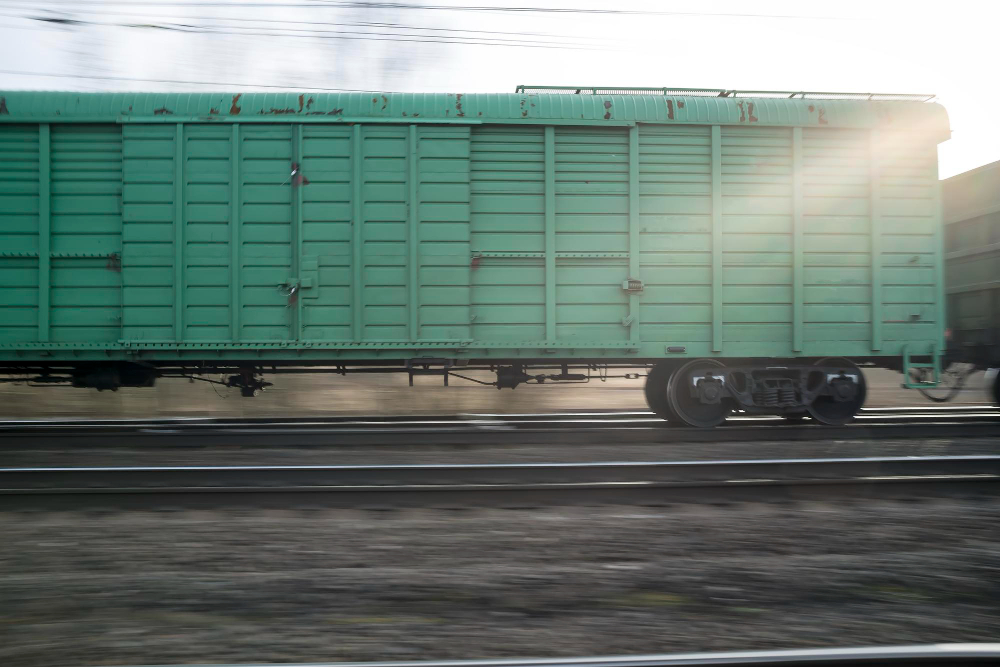
    • Closed wagons (general cargo)


      Description: Fully enclosed wagons that protect the cargo from external factors such as rain, dust, and impacts.

      Applications: Transport of fragile goods, consumer products, clothing, household appliances, and electronic devices.

      Capacity: Up to 60 tons.
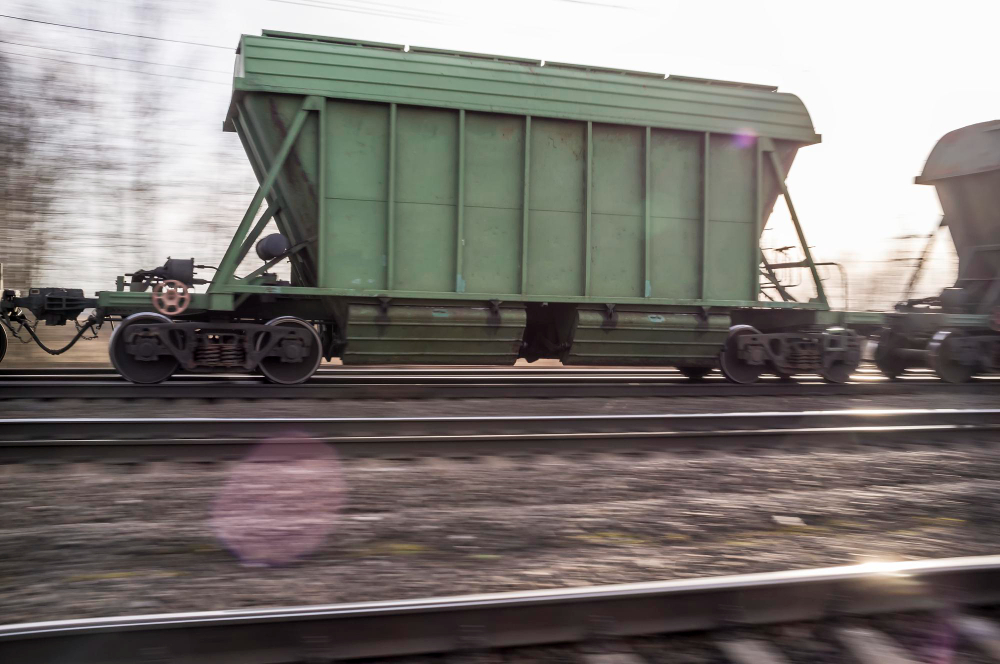
    • Hopper wagons (Bulk cargo)


      Description: Specifically designed for products such as grains, minerals, and coal. Loading is done from the top and unloading takes place by gravity through bottom hatches.

      Applications: Agricultural sector, mining, and chemical industry.

      Capacity: Up to 80 tons.
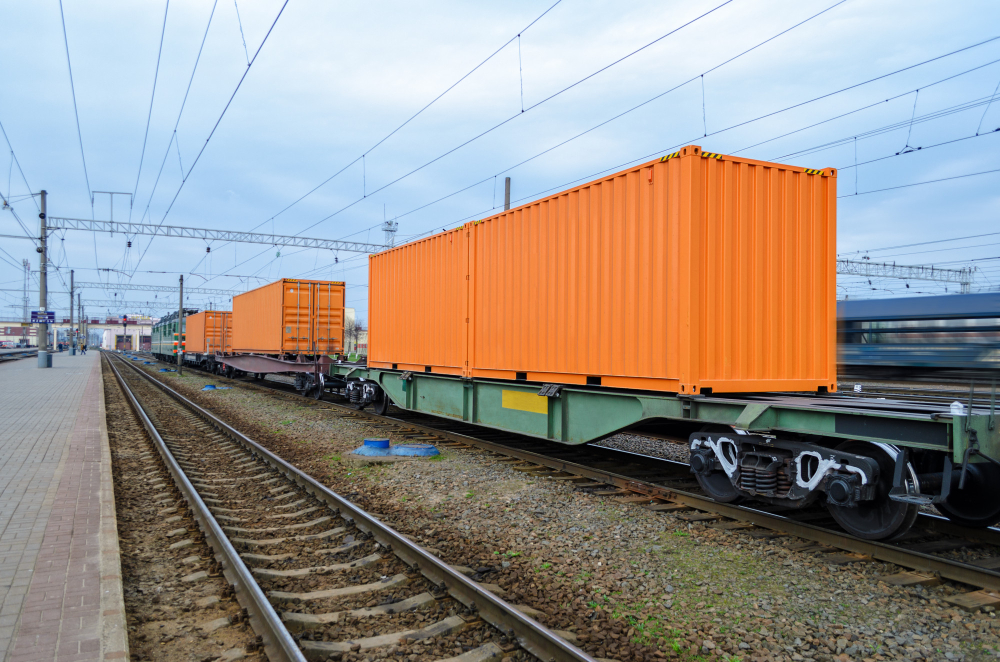
    • Flatcars (Intermodal)


      Description: They are flat platforms that allow the transport of containers, heavy machinery, and vehicles.

      Applications: Intermodal transport in logistics terminals and ports.

      Capacity: Up to 40 tons per container.
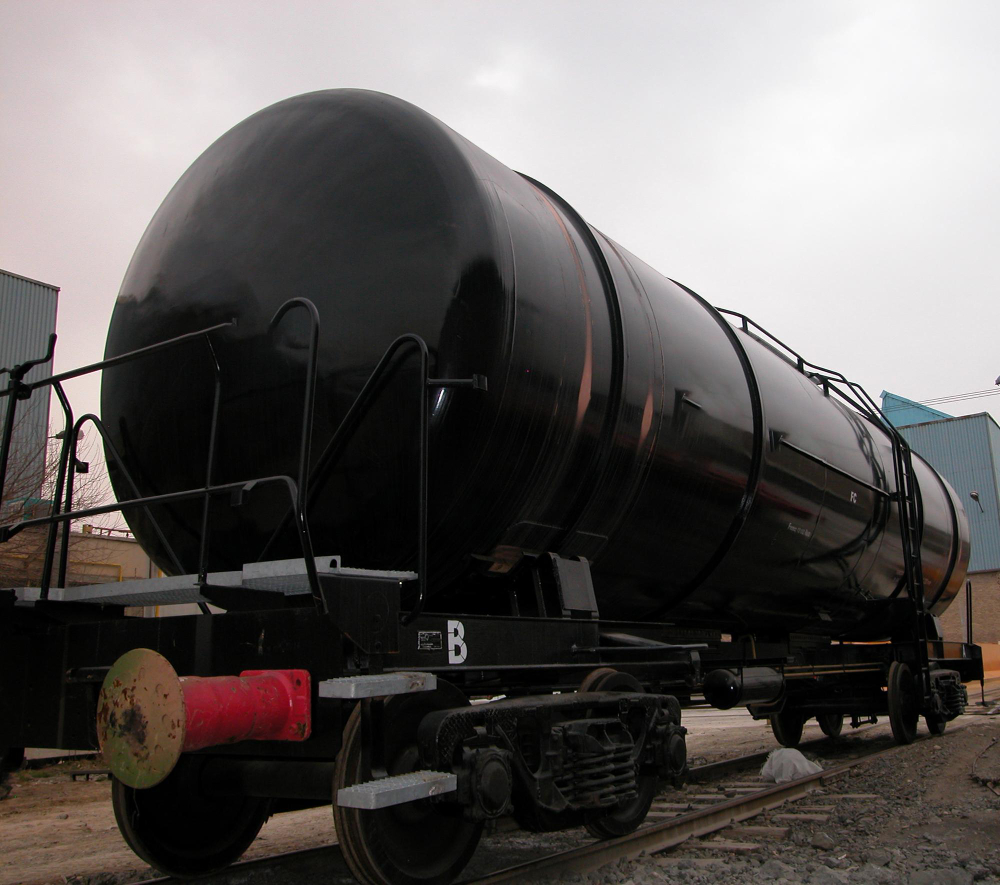
    • Tank wagons (Liquids and gases)


      Description: Specialized wagons designed to transport liquids such as fuels, oils, chemicals, and liquid food products.

      Applications: Energy, petrochemical, and food industries.

      Capacity: Up to 60,000 liters.


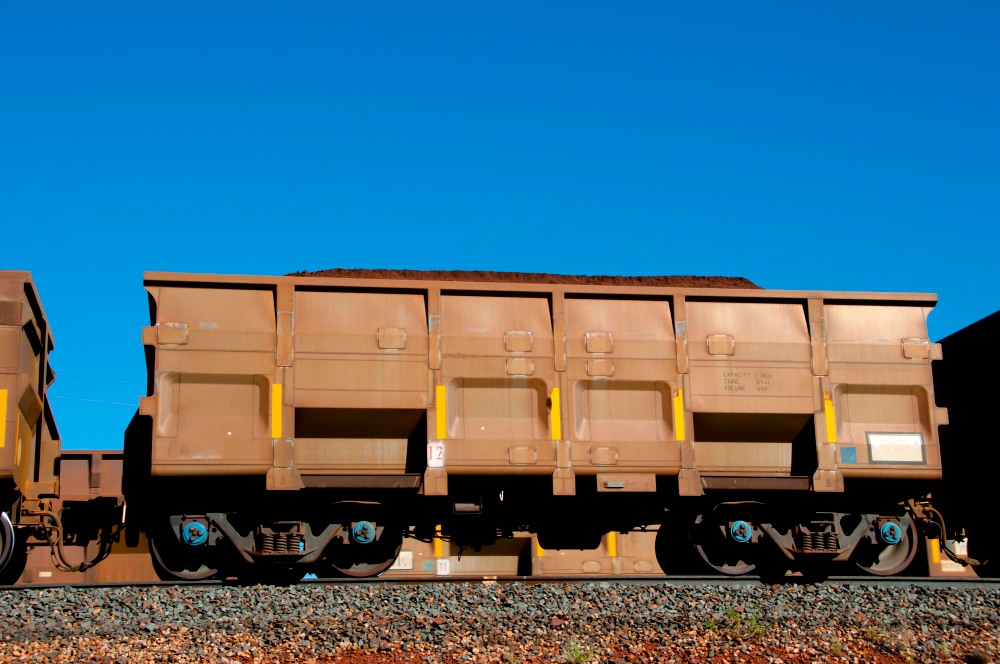
    • Open wagons (Gondolas)


      Description: Wagons without a roof designed for weather-resistant materials such as metals, wood, and construction products.

      Applications: Construction and heavy industry.

      Capacity: Up to 70 tons.
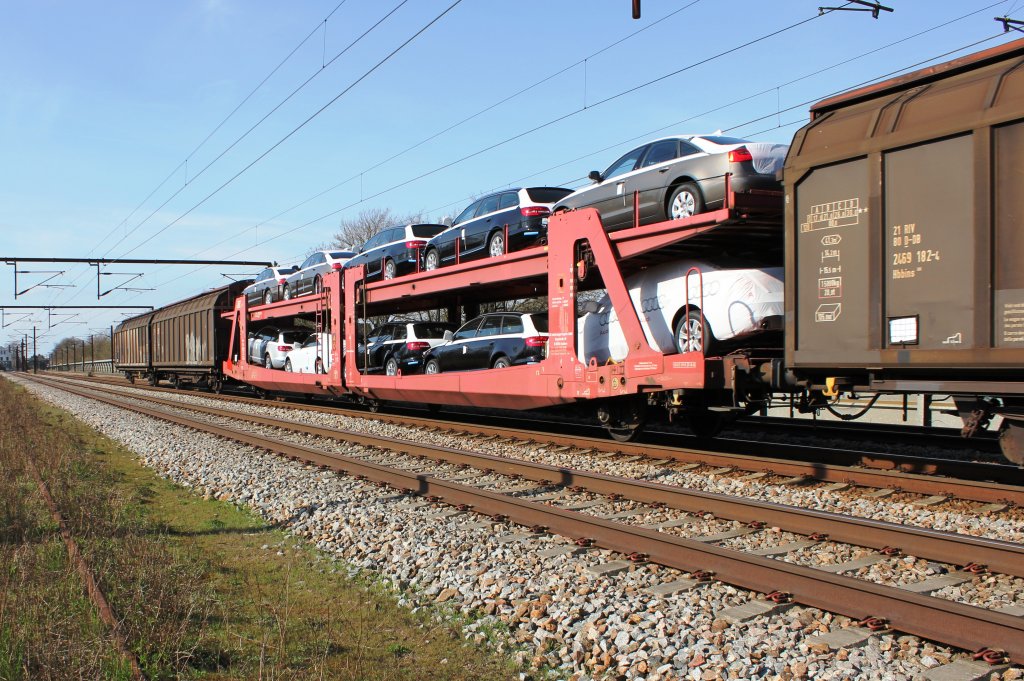
    • Car carrier wagons


      Description: Double-deck wagons designed for transporting vehicles. They are equipped with securing systems to ensure safety during transit.

      Applications: Automotive sector.

      Capacity: Up to 20 vehicles per wagon.

    Advantages of freight rail transport

    The use of specialized freight wagons offers numerous advantages for companies in industrial and commercial sectors:

    Cost reduction: Rail transport is more cost-effective than other modes over long distances.

    Sustainability: Lower carbon footprint compared to road transportation.

    Operational efficiency: Automated loading and unloading at specialized rail terminals.

    Security: Lower risk of accidents and theft.

    High capacity: Ability to transport large volumes in a single trip.

    Future trends in freight rail transport

    The rail sector is constantly evolving, driven by digitalization and the development of advanced technologies:

    Digitalization and automation: Use of intelligent systems for real-time management and monitoring.

    Smart wagons: Equipped with IoT sensors that monitor temperature, location, and cargo status.

    Sustainability: Introduction of electric and hybrid trains that further reduce CO₂ emissions.

    Advanced intermodal transport: Greater integration between rail, road, and sea transport to facilitate global supply chains.

    Frequently Asked Questions (FAQs)

    What types of goods can be transported in freight wagons?

    All kinds of goods can be transported, from agricultural products and construction materials to chemicals, cars, and consumer goods.

    How are freight wagons loaded and unloaded?

    It depends on the type of wagon. Closed and tank wagons require specific equipment, while hopper and flat wagons allow for automated operations at specialized terminals.

    What advantages does rail transport offer compared to other means?

    It is more cost-effective over long distances, offers higher load capacity, and produces fewer carbon emissions.

    Which companies primarily use rail transport?

    Companies in sectors such as mining, agriculture, automotive, petrochemicals, construction, and retail distribution.

    The future of freight rail lies in specialization

    In an increasingly globalized world, choosing the right type of freight wagon is essential to maximize operational efficiency, reduce costs, and improve competitiveness. Technology and sustainability will continue to drive innovation in rail transport, ensuring a more connected and efficient future. Companies around the world are already adopting these solutions to manage their supply chains more effectively. Are you ready to take your logistics to the next level? Choose rail transport and unlock its full potential!